A structured three-phase deployment path from 50 MW initial capacity to 200 MW full campus buildout — financeable at each stage, with a clear and preserved expansion path throughout.
The campus is structured to scale in practical increments. Each phase is designed to be independently operational and financeable while laying the groundwork for the next expansion, ensuring tenants benefit from a proven and operational environment before committing to larger capacity deployments.
Phase 1 — Initial Deployment
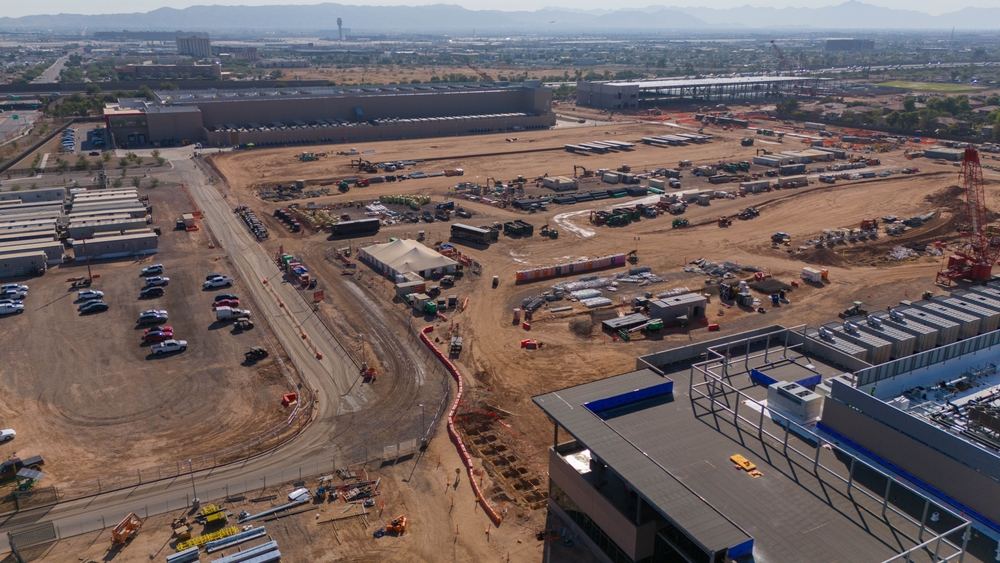
The initial deployment establishes the campus with two fully operational AI data center buildings, DC1 and DC2. Core power, cooling, water, connectivity, and security infrastructure is commissioned for the full campus scale — including the 230 kV substation and water treatment systems. Phase 1 is designed as a standalone, financeable deployment delivering immediate operational capacity while preserving a clear expansion path to Phases 2 and 3.

Phase 2 — Scale-Out Expansion
Phase 2 adds three additional AI data center buildings — DC3, DC4, and DC5 — expanding total campus capacity to approximately 125 MW. The Phase 1 infrastructure backbone, including the 230 kV substation, cooling water zone, fiber network zone, and water treatment systems, is already sized to support this expansion without requiring rebuilding or material disruption to Phase 1 operations.
Phase 3 — Full Buildout
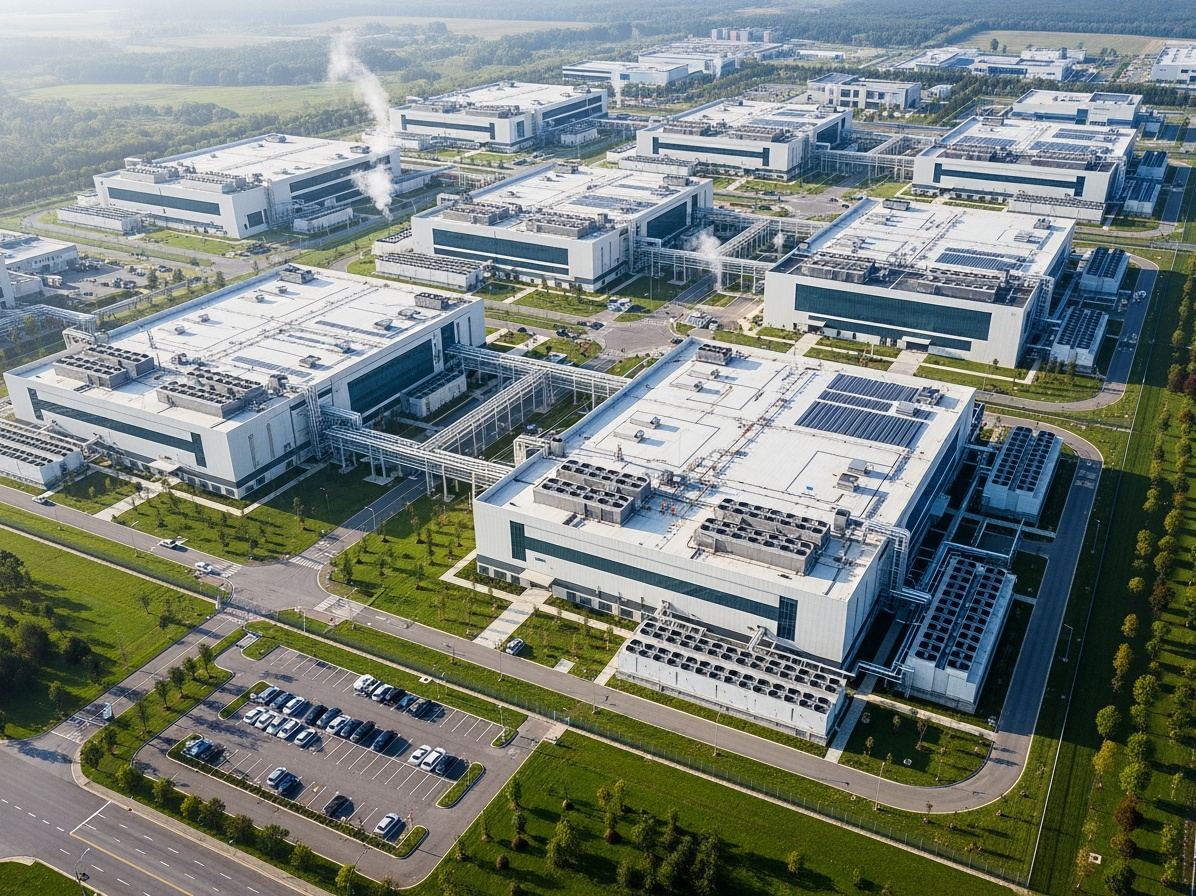
Phase 3 completes the campus with the final two AI data center buildings, DC6 and DC7, delivering the full 200 MW vision across all seven buildings. The completed 42-hectare campus represents a leading-scale AI infrastructure platform in Central America, designed with the infrastructure, Free Zone economics, and renewable-energy-oriented power profile to attract international hyperscale deployments.
Phased development serves the interests of both the campus operator and prospective tenants. For operators, it allows capital to be deployed in manageable, financeable increments with a clearly defined path to full buildout. For tenants, it provides confidence that the initial deployment environment is proven and operational before committing to larger capacity requirements.
Financeable at each stage. Each phase is designed to stand on its own as a financeable, operational data center deployment — reducing development risk and capital requirements for the initial buildout.
Infrastructure sized for the full campus from day one. The backbone infrastructure — 230 kV substation, cooling water zone, fiber network zone, and water systems — is designed at full 200 MW scale, preventing costly rebuilds during expansion phases.
Tenant confidence through proven operations. Phase 1 tenants operate in a commissioned, tested environment. Phase 2 and 3 commitments can be made with full visibility into actual campus performance.
Preserves expansion optionality. Tenants committing at Phase 1 capacity retain the ability to expand within the same campus environment as their compute requirements grow — without relocation or infrastructure transition costs.
One of the most important design decisions in multi-phase campus development is how shared infrastructure is sized. The Quantum AI Free Zone Campus approach is to design the infrastructure backbone at full 200 MW capacity from Phase 1 onward.
This means the 230 kV on-site substation, the cooling water zone, the network fiber zone, and the on-site water treatment systems are all designed to support the complete campus — not just the initial phase. Each subsequent phase expansion connects to existing backbone systems without requiring material infrastructure replacement.
This approach provides a more efficient capital deployment path and eliminates a common source of disruption during multi-phase data center campus expansions.
Whether you're evaluating a 10 MW initial deployment or a full Phase 1 commitment at 50 MW, the Quantum AI Free Zone Campus team is ready to discuss how the phasing structure can align with your capacity roadmap and capital planning requirements.